About Wildfire Data Recovery Brisbane 2026 Updated
Get to know Wildfire Data Recovery
We’re a Brisbane-based team with a passion for technology, solving problems and helping people. We’ve built Wildfire around honest communication, personal service and pride in our work: values that guide how we support individuals and businesses across Australia.
“Had a massive problem with my iPhone X as it suffered water damage. It was successfully recovered by Viktor. The data off the old iPhone was put into the Cloud and I downloaded from there onto the new iPhone. Many thanks to Viktor who provides a great service.”
SWSteve W.Google review · 5 stars · water-damaged iPhone X
“Absolutely outstanding service from Wildfire Data Recovery! We came to them with several locked Samsung and ZTE mobile phones that we could no longer access. They were able to bypass the lost PIN numbers, recover the data, and also performed full forensic file analysis on each device. The level of detail and care is truly impressive.”
“This was my first time needing data recovery, and I’m so glad I went to Wildfire Data Recovery. After spilling coffee all over my laptop, I thought everything was lost, but Viktor was incredibly reassuring and got to work right away. He and his team are extremely fast, professional, and communicative throughout the process.”
“Wildfire Data Recovery were able to recover our BitLocker encrypted drive when we had all but given up on it. Communication was clear the whole way through and the price was exactly what we were quoted.”
“Excellent, professional service. Viktor kept us informed at every stage and recovered the data we needed for our operations. Highly recommend for anyone in the marine or inspection industry.”
“Great communication and a great result. Would use again without hesitation.”
PCPhillip C.Google review · 5 stars
Reviews are reproduced word for word from our public Google Business Profile (4.8 stars, 95 reviews) and our Facebook page (4.8 stars, 19 reviews). Read them on Google.
Who is Wildfire Data Recovery?
Wildfire Data Recovery is a Brisbane data recovery company that recovers files from failed and damaged storage (hard drives, SSDs, phones, memory cards, RAID arrays and NAS boxes) for clients across Australia. The bench work started in 2016 and the business was registered under this name in 2018. The work is done in our own lab by our own engineers. Diagnostics are free, you see a file list before you pay, and if we cannot recover your data there is no recovery fee.
We are a small team on purpose. The person who assesses your device is the person who works on it and the person you can ring back. Start with the service pages if you already know what failed, or the free Express Post intake if you are outside Brisbane.
Our story
Three engineers, $3,000, and a lot of drives nobody else would touch
We started Wildfire Data Recovery because too many Australians were being told their data was “unrecoverable” when it simply wasn’t. Here is how the last decade actually went.
2016 · The garage
Bench work begins in Brisbane
Before there was a company there was a bench: borrowed imaging hardware, a microscope and a growing queue of drives that computer shops had given up on. The first client was a Brisbane wedding photographer who had lost an entire ceremony. We got every photo back. She told her friends, and they told theirs.
2018 · Registered
Wildfire Data Recovery becomes a company
Viktor Burcevski, David Williams and Martin Daniels pooled $3,000, bought the professional recovery hardware they had been borrowing, and registered Wildfire Data Recovery in Brisbane. The rule from the first invoice has not changed: nobody pays for a recovery they have not seen.
2020 · Out of the garage
A proper bench, and the first ISO Class 5 clean-air bench
Volume outgrew the garage. We moved into a dedicated lab space and invested in ISO Class 5 portable clean-air equipment so platter transplants and head swaps could be done properly rather than hopefully. A donor parts library started accumulating in the same year. Today it runs to hundreds of matched heads, PCBs and motors.
2022 · Phones and forensics
Mobile and forensic work becomes half the bench
Phones stopped being a side line. Encrypted iPhones, locked Androids, chip-level board repair and evidence-sensitive extraction for legal matters became a standing part of the workload, which is why the lab now runs mobile forensic tooling alongside the drive kit.
2024 · Australia-wide
Free Express Post intake for the whole country
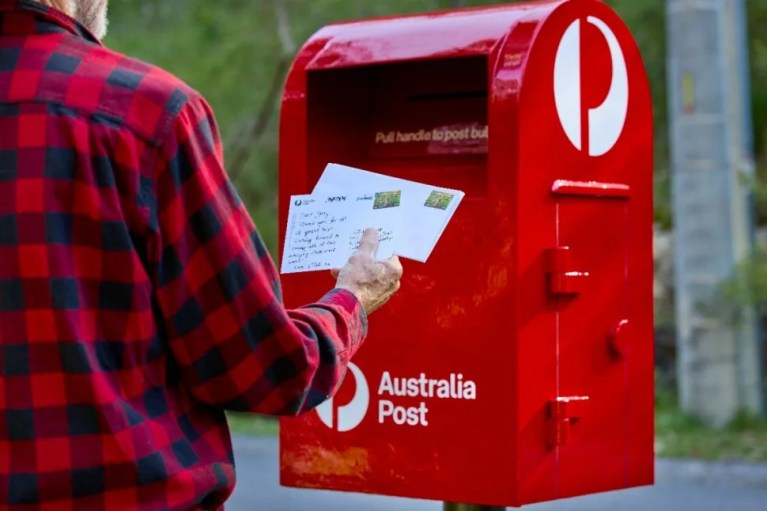
Most Australians do not live near a recovery lab, and the ones who do usually cannot leave work to drive to it. We put a prepaid Australia Post Express label at the front of the process so a drive in Darwin gets the same bench as a drive in Brisbane, at no postage cost to the client.
Today
15,000+ clients, and the same rule as day one
We have served more than 15,000 clients. The rule has not changed: you find out what is recoverable before you spend anything, you see the file list before you pay, and if the data does not come back neither does an invoice. The No Data, No Fee terms are published in full.
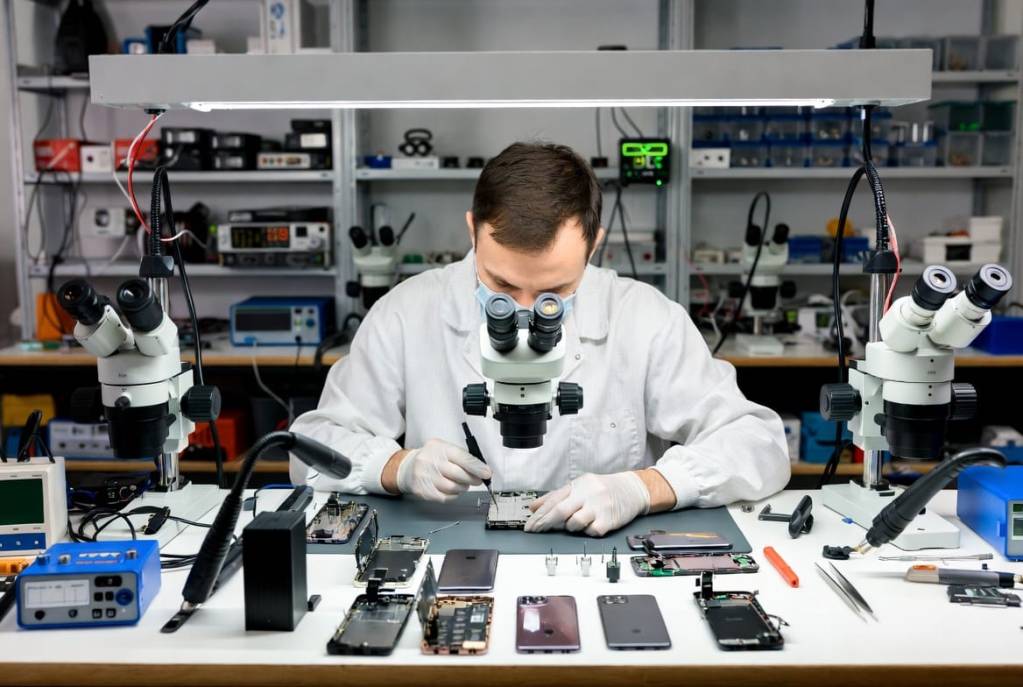
An open drive on the bench. Most of this job is patience, not heroics.
Why the honesty matters to us. This industry has a habit of quoting big, promising everything and explaining nothing. We would rather tell you on day one that your case is a long shot than take your money and tell you on day thirty.
That is also why the numbers on this page are the real ones. Our success rate is 92%, not 99%. The 8% are real jobs with real people attached, and pretending otherwise would not do them any favours.
The people
The data recovery engineers who will actually be holding your device
Three engineers, one bench, no account managers in between. When you call, you get one of the data recovery experts who will actually work on your device.
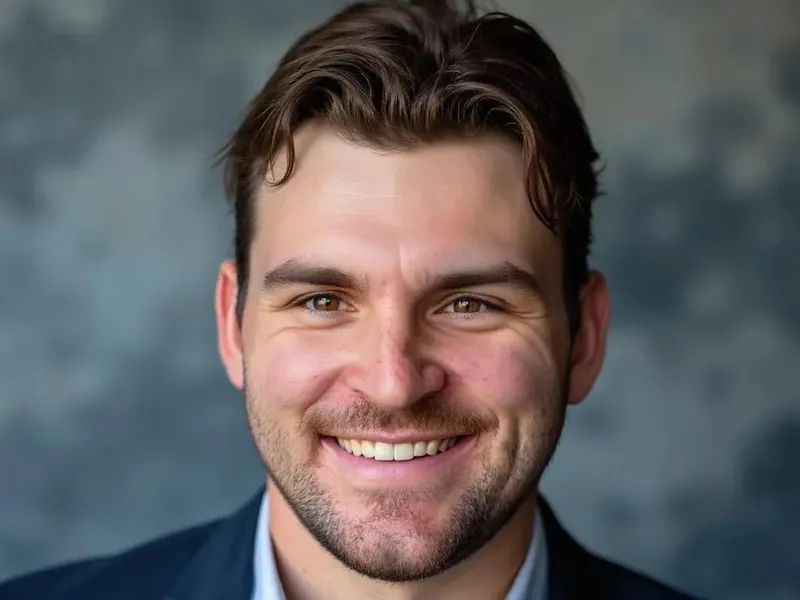
Viktor Burcevski
Founder & lead recovery engineer
Runs the lab and takes the hardest cases himself: forensic extractions, board-level work and the jobs other labs have already returned. Most of the reviews on this page name him because he is usually the one who rang the client back.
Forensic recovery
Board-level repair
Mobile extraction
Encrypted media
What Viktor works on
Chip-off and in-system NAND work, micro-soldering on damaged boards, iOS and Android extractions where the owner holds the passcode, BitLocker and FileVault volumes with the client’s key, and evidence-sensitive matters that need documented handling and hashing. He signs the forensic reports that go to solicitors.
David Williams
Co-founder · mobile & encryption
Co-founded Wildfire in 2018 and owns the mobile side of the bench: phones and tablets that are smashed, drowned, dead or locked, plus the encryption problems that come attached to all of them.
iPhone & iPad
Android & Samsung
Encryption
Water damage
What David works on
Liquid-damage triage and ultrasonic cleaning, display and charge-circuit faults that block access to otherwise intact storage, Secure Enclave and hardware-keyed Android devices, and the honest conversations about what a locked device can and cannot give up.
Martin Daniels
Electrical engineer
The electrical engineering half of the founding trio. Power faults, burnt PCBs, shorted controllers and the RAID and NAS rebuilds where the failure is in the electronics rather than the platters.
PCB repair
Power faults
RAID & NAS
Donor matching
What Martin works on
Diagnosing dead drives that never spin up, transplanting ROM between boards so a donor PCB will actually address the right platters, multi-disk array reconstruction where the controller lost the geometry, and keeping the donor library matched and catalogued.
Inside the lab
The bench, station by station
Recovery is a hardware problem before it is a software problem. This is the route your device takes through our Brisbane lab, from the intake desk to the encrypted drive we hand back. Select a station to see what happens there, which tools are used and what you see from your side.
Station 01
Intake and custody desk
Every device is photographed, its serial and condition recorded, and a case reference opened before anyone touches it. Drives arriving by Express Post are logged against the tracking number. Evidence-sensitive matters get a signed chain-of-custody record from this desk onwards.
Tools
Case register, Track My Recovery client portal, custody forms
You see
An intake confirmation with your case reference and portal login
Why it matters
A recovery you cannot trace is a recovery you cannot trust. This is where traceability starts.
Station 02
Diagnostic bench
We work out what has actually failed: mechanical, electronic, firmware, logical or a combination. Drives are powered through current-limited supplies and read at firmware level, so a drive with damaged heads is not spun for a second longer than it has to be. The outcome is a written diagnosis and a fixed quote.
Tools
PC-3000 systems, current-limited bench supplies, terminal access to drive firmware
You see
A written assessment, the recovery level, and a fixed price before any work starts
Why it matters
Most home “recovery attempts” fail here, by powering a failing drive until it destroys itself.
Station 03
Imaging station
Source media is read through a write-blocked hardware imager and hashed. The imager controls read timeouts sector by sector, skips bad areas and comes back for them later, so a dying drive gives up its data in the order that costs it least. Everything after this station works from the image, never the original.
Tools
Hardware imagers with per-sector timeout control, write blockers, SHA-256 hashing
You see
Progress in the portal, and the imaging percentage on your quote if the media is unstable
Why it matters
A second attempt is always possible, and the evidence value of the original is never spent.
Station 04
ISO Class 5 clean-air bench
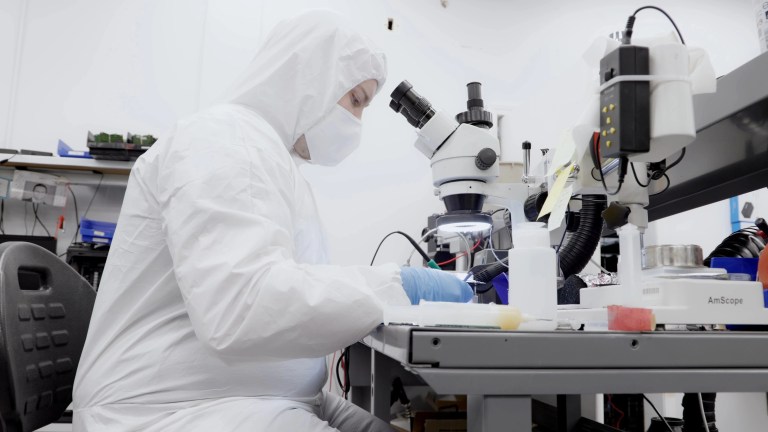
Anything that requires a drive to be opened happens inside ISO Class 5 portable clean-air equipment: head-stack replacement, platter transplants, contamination cleanup. The donor library (hundreds of matched heads, PCBs and motors) lives beside this bench, because a head swap only works with a genuinely compatible donor.
Tools
ISO Class 5 laminar-flow enclosures, head-swap tooling, platter handling jigs, donor library
You see
Nothing until it is done: this is the one station where interruptions cost recoveries
Why it matters
See the clean-air explainer below: a read head flies closer to the platter than a smoke particle is wide.
Station 05
Electronics and chip-off bench
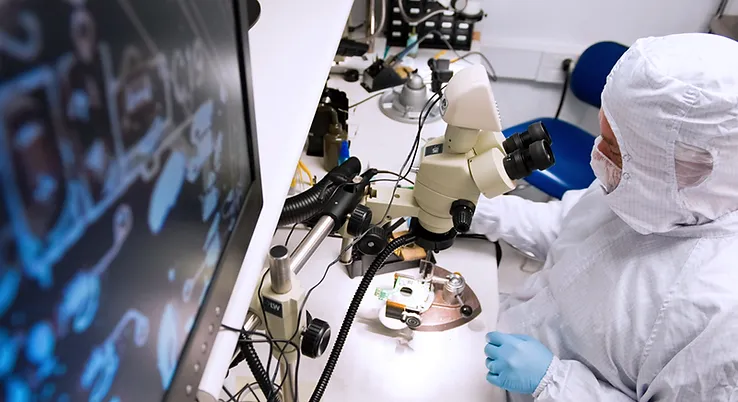
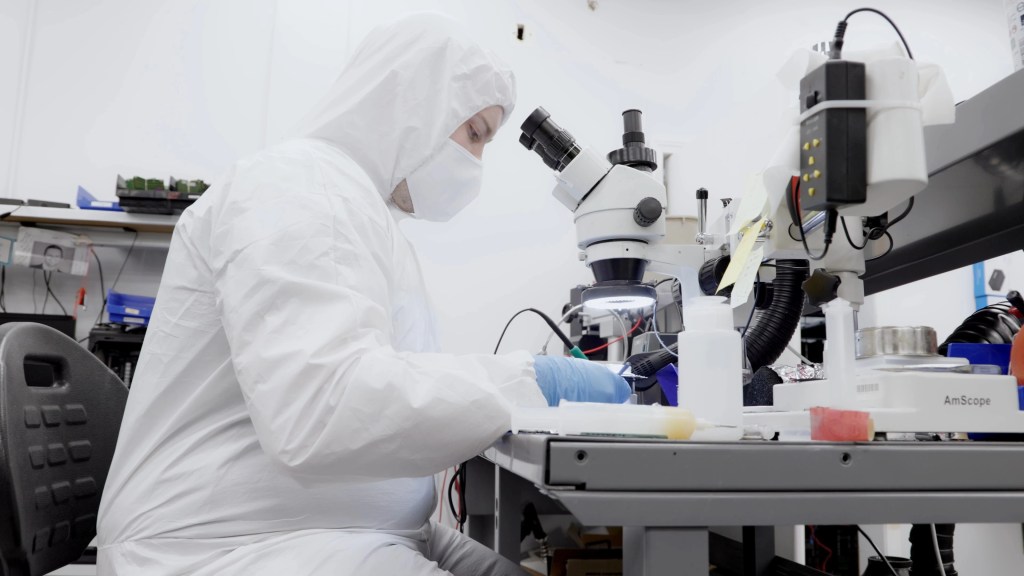
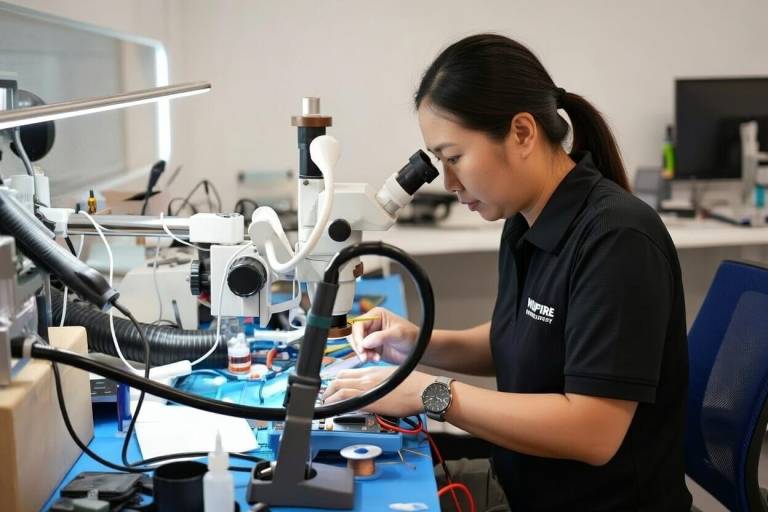
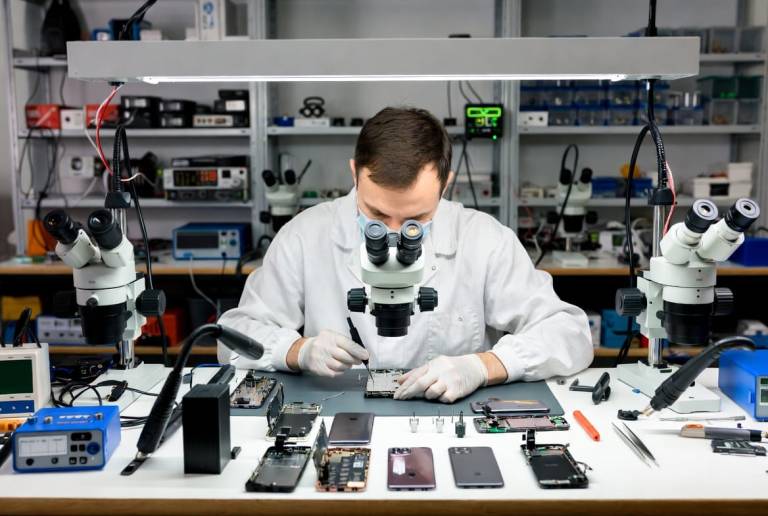
Board-level repair under the microscope: reflowing a power IC, rebuilding a torn pad, transplanting the ROM between a dead PCB and a donor so the donor board addresses the right platters, or lifting a NAND package off a phone or SSD and reading it directly when the board cannot be revived.
Tools
Stereo microscopes, hot-air and micro-soldering stations, programmers for ROM transfer, NAND readers
You see
A quote that names the fault (for example “shorted controller, ROM transfer to donor”) rather than a vague “board repair”
Why it matters
Chip-off is destructive to the device. We say so before we do it, and we do it once.
Station 06
Mobile and forensics bench
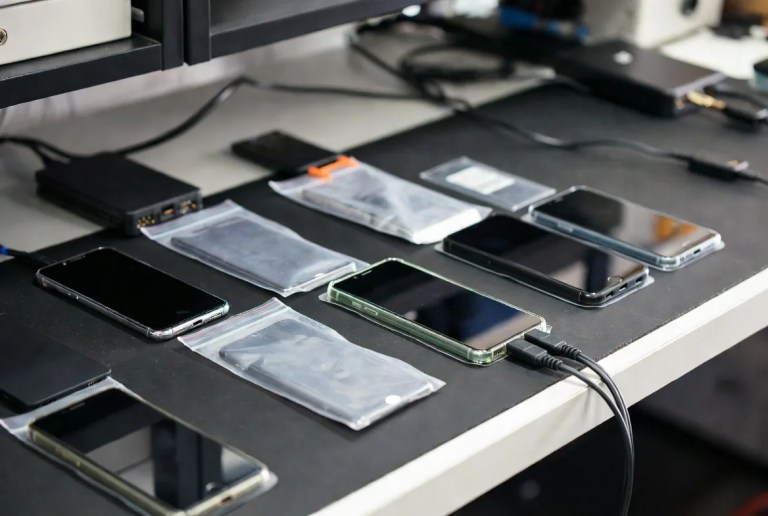
Owner-authorised extraction from iPhones, iPads and Android devices, and evidence-sensitive work for legal matters where the handling has to stand up to scrutiny. Full-filesystem extraction where the device and passcode allow it; liquid-damage triage and ultrasonic cleaning for phones that will not power on.
Located data and recovered (deleted) data labelled separately in every report
Why it matters
Modern phones encrypt everything. Without the owner’s passcode most data is unreadable, and we will tell you that before you pay.
Station 07
RAID and NAS reconstruction
Every member disk is imaged first. The array is then reassembled virtually from the images: stripe size, disk order, parity rotation and offsets are worked out from the data itself when the controller has forgotten them. Only then is the file system rebuilt and the files extracted.
Tools
Multi-drive imaging, virtual RAID reconstruction software, file system analysers for NTFS, ext4, Btrfs, APFS and ZFS
You see
A file list of the rebuilt volume before you pay
Why it matters
A “rebuild” on a degraded array is the most common way to turn a recoverable NAS into an unrecoverable one.
Station 08
Verification and return
Recovered files are listed and sample-opened before an invoice exists. Data is returned on an encrypted drive or by secure download, and the original device comes back to you by tracked post. Working copies in our custody are destroyed after the verification window, or earlier on request with a certificate of destruction.
Tools
File verification, encrypted return media, tracked Australia Post Express return
You see
The file list, then the invoice, then your data
Why it matters
Proof before payment is the whole business model. Everything upstream exists to make this step honest.
The kit the work is done with
PC-3000 systems
Firmware-level access to failing hard drives and SSDs: the tool that talks to a drive’s service area when the drive will no longer talk to a computer. Used for head-map edits, module repair and slow imaging of dying media.
Mobile forensic tooling
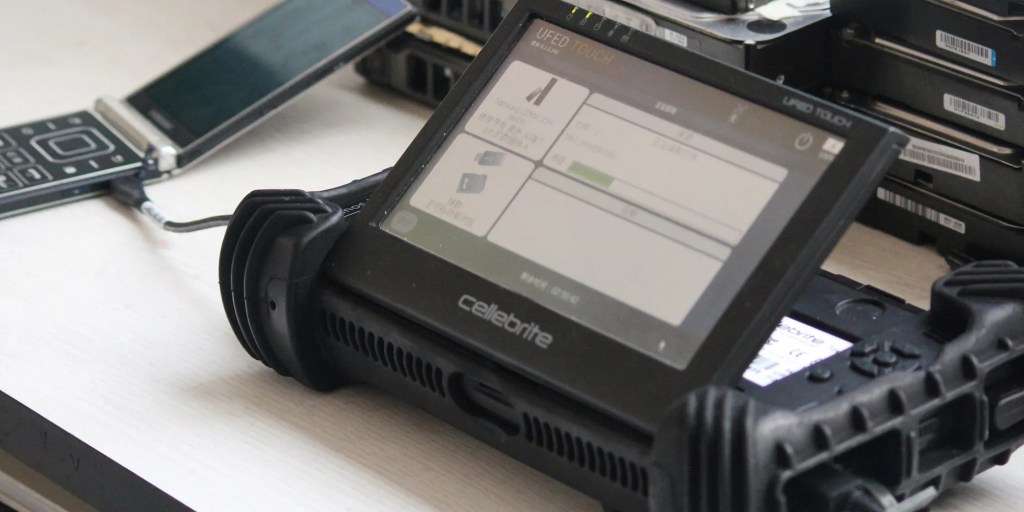
Cellebrite UFED, MOBILedit Forensic Ultra, Oxygen Forensic Detective and Magnet AXIOM for iOS and Android, used for owner-authorised recovery and for evidence-sensitive matters where the handling has to stand up to scrutiny.
ISO Class 5 portable clean-air equipment
Filtered, positive-pressure laminar-flow enclosures for anything that requires a drive to be opened: head-stack replacement, platter transplants, contamination cleanup. Equipment-grade Class 5 air at the bench, rather than a walk-in room we would have to charge you for.
Donor parts library
Hundreds of matched heads, PCBs and motors on the shelf. A head swap only works with a genuinely compatible donor, and the difference between “same model” and “same firmware revision and head map” is the difference between a recovery and a scrapped drive.
Micro-soldering & chip-off
Rework stations and microscopes for board-level repair: reflowing a power IC, rebuilding a torn pad, or lifting a NAND package off a dead board and reading it directly when the board itself cannot be revived.
Write-blocked imaging & hashing
Source media is read read-only and hashed before anything else happens. Every recovery works from an image, never the original, so a second attempt is always possible and the evidence value of the original is never spent.
The Brisbane lab.Mobile extraction in progress.Board-level work under the scope.
What comes across the mobile bench
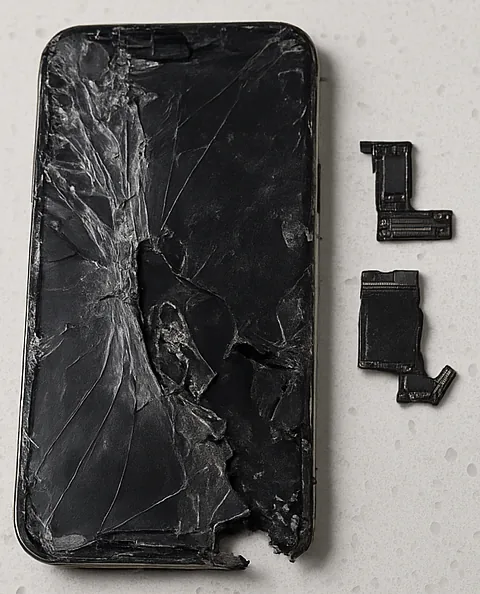
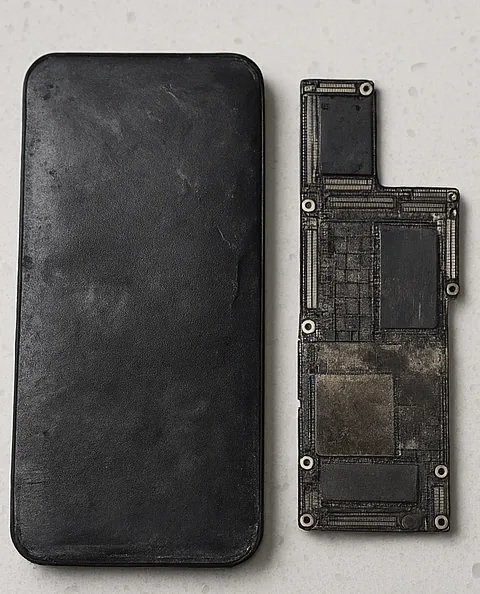
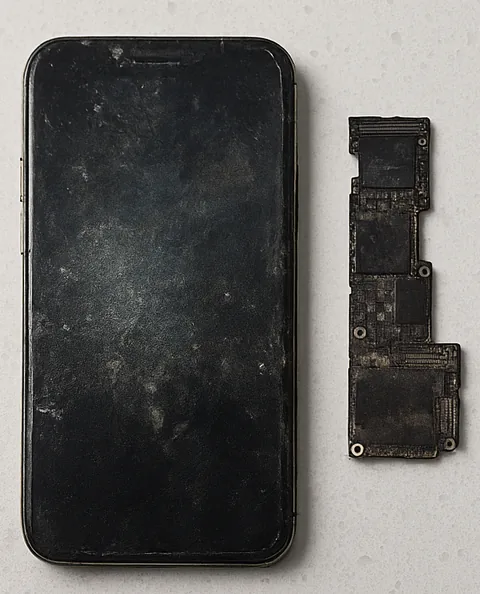
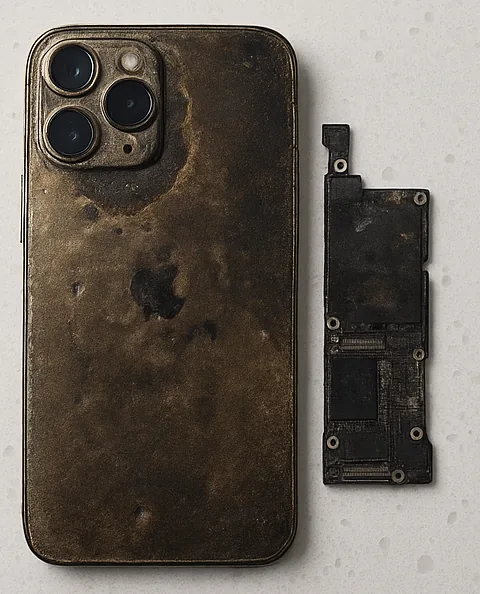
Four kinds of damage that arrive at station 06, and the route each one takes. On a modern phone the screen, frame and battery are disposable; the data lives on the logic board, encrypted, and the board is the only part we are trying to save. The diagnostic tells you what the bench can attempt and what it will cost. Whether the data itself survived is often only known once the board is powered again, and we say that at the desk rather than after you have paid.
Run over by a vehicleiPhone 13 Pro, logic board broken in two. The break is mapped under the microscope before anything is powered. If the processor and storage packages are intact, the work is a board-level transplant to a donor, done once.Station 05: electronics benchCrushed by industrial equipmentiPhone 12 Pro Max, board out of the housing. Crush damage cracks solder joints and sometimes the packages themselves. Cracked joints reflow; a cracked package is where we stop and tell you.Station 05: electronics benchSeawater, 48 hoursiPhone X, corroded logic board. Salt water keeps eating the board while the phone sits in a drawer, so this one goes to ultrasonic cleaning first, then the power rails are traced fault by fault.Station 06: mobile benchHouse fireiPhone 11 Pro, heat-damaged board. Heat is the damage that most often ends a case: past the solder's melting point the packages themselves are at risk. We say so at the diagnostic, before any money changes hands.Station 05: electronics bench
No phone is promised a result at intake. A Level 4 or Level 5 device is quoted on what the bench can attempt, and you see the file list before you pay.
Reference: why the air matters
Why a hard drive is never opened on an ordinary desk: ISO Class 5 explained
Every data recovery company mentions a cleanroom or clean bench. Almost none explain what the number means. Here is the standard behind the claim, and the scale of the problem it solves, so you can judge any lab’s wording, including ours.
Bar chart of the maximum particles per cubic metre allowed at 0.5 micrometres for ISO Classes 5 to 9. Values are in the table below.
Table view: ISO 14644-1 class limits
ISO class
Max particles per m³ (0.5 µm and larger)
Old FED-STD-209E name
Where you meet it
ISO 5
3,520
Class 100
Our open-drive benches; semiconductor and pharmaceutical work
ISO 6
35,200
Class 1,000
Cleanroom gowning areas
ISO 7
352,000
Class 10,000
Hospital operating theatres (typical)
ISO 8
3,520,000
Class 100,000
Controlled packaging areas
ISO 9
35,200,000
Room air
An ordinary office or workshop
Chart comparing the flying height of a hard drive read head with the size of everyday contaminants, on a logarithmic scale in nanometres. Values are in the table below.
Table view: sizes on the bench
Item
Size
Source
Read-head flying height (modern drive)
about 1 to 5 nm
UC San Diego CMRR; IEEE Transactions on Magnetics
Fingerprint residue thickness
about 100 nm (0.1 µm)
NIJ Fingerprint Sourcebook
Tobacco smoke particle
10 to 4,000 nm
Engineering ToolBox
ISO 14644-1 counting size used above
500 nm (0.5 µm)
ISO 14644-1:2015
Household dust
50 to 100,000 nm
Engineering ToolBox
Human hair diameter
about 70,000 nm (70 µm)
US EPA
Hover or tab through the bars for exact figures. Logarithmic scales: each gridline is ten times the last.
What the number actually says
ISO 14644-1 classifies air by how many particles of a given size may be present in one cubic metre. ISO Class 5 allows no more than 3,520 particles of 0.5 micrometres or larger per cubic metre. Ordinary room air sits around ISO 9, ten thousand times dirtier. The old American name for ISO 5 was “Class 100”, which is why both terms still appear on recovery websites.
<5 nmThe read head of a modern hard drive flies a few nanometres above the platter. A smoke particle can be a thousand times taller than that gap.
10,000×The difference in allowed particle count between the ISO Class 5 air at our open-drive bench and the ISO Class 9 air in an ordinary workshop.
What we run, in plain words
Our open-drive work is done inside ISO Class 5 portable clean-air equipment: laminar-flow enclosures that filter the air and push it across the bench under positive pressure. We do not describe this as a walk-in cleanroom, because it is not one. It is equipment-grade Class 5 air exactly where the platters are exposed, which is the part that protects your drive, at a cost that does not have to be passed on to you.
The particle limits, the head fly height figures and the size comparisons above come from the standard and from engineering literature, listed in the references at the end of this page.
How it works
What happens between “I think I’ve lost everything” and getting your files back
Four steps, and you can stop at any point before you have agreed to anything.
Send it, or hand it over
Tell us what happened and we email a prepaid Australia Post Express label. Brisbane clients can book a free collection or a drop-off. Keep a damaged device powered off until it reaches us.
Postage on us
Free diagnostic
We find out what is actually wrong (mechanical, electronic, firmware, logical or a combination) and what that means for your odds. You get a written assessment, the recovery level and a fixed price.
$0
You approve, we recover
Nothing starts until you say yes to a number you have seen in writing. Work happens on an image of your media, never the original, so a difficult job can be attempted more than once.
Fixed quote
Proof, then payment
You get a list of what was recovered before you pay. Data comes back on an encrypted drive or a secure download. No recovery, no recovery fee.
Proof first
Chain of custody: what happens to your device, step by step
The same handling rules apply to a family photo drive and to a phone that is going to court. Select a step to see what is recorded and why.
Step 1
Logged and photographed
Serial number, model, visible damage and the exact condition of connectors and seals are recorded with photographs before any work. For legal matters this becomes the first entry on a signed custody record that travels with the device.
Step 2
Write-blocked
The media is only ever connected through hardware that physically cannot write to it. Nothing we do can change a single byte on your original, which is also what makes the process defensible if it is ever questioned.
Step 3
Imaged and hashed
A sector-level copy is taken and a SHA-256 hash of the image is recorded. The hash is a fingerprint: if a single bit of the image changed later, the fingerprint would no longer match, so anyone can prove the copy is faithful.
Step 4
Recovered from the image
File system repair, carving of deleted files and decryption with your key all happen on the image. Your original sits on the shelf, untouched, available for a second attempt or an independent examiner.
Step 5
Verified and listed
Recovered files are counted and sample-opened. You receive the file list before any invoice. In reports, data that was live on the device (located) is labelled separately from data that was deleted and restored (recovered).
Step 6
Returned encrypted
Data goes back on an encrypted drive or by secure download. Nothing is stored in a third-party cloud as part of the recovery and nothing leaves Australia.
Step 7
Copies destroyed
Working copies are held only for the post-delivery verification window and are then destroyed. You can ask for earlier destruction and a certificate of destruction at any time.
Reference: how jobs are classified
The five recovery levels, and what “recovered” means at each
Every job at Wildfire is classified Level 1 to Level 5 by complexity, across every device type. The level sets the success threshold you are entitled to under our No Data, No Fee terms, and whether the case carries an upfront component. Select a level.
Level 1: Basic logical recovery
The device works, the data does not: deleted files, a corrupted file system, an accidental format on a healthy drive or card. No parts, no clean-air work. Typical devices: USB sticks, memory cards, healthy external drives, phones with a working system.
Success threshold80% or more of addressable user data
Firmware faults, damaged translators, file system rebuilds where the metadata is gone and the files have to be reconstructed from the structures that survive. Still no physical intervention, but firmware-level tooling and a lot of engineer time.
Success threshold80% or more of addressable user data
Something has to be repaired or replaced before the data can be read: a head stack, a spindle motor, a PCB with a ROM transfer. This is where the clean-air bench and the donor library come in, and where a drive that has been powered on repeatedly at home starts costing odds.
Success threshold75% or more of addressable user data
Fee structureFixed upfront component for parts and lab time, plus success fee
Severe physical damage or several faults at once: platter damage, multi-component failures, chip-off NAND reads with decryption, the cases other labs have returned. Each is scoped individually and the quote names the specific work.
Success threshold70% or more of addressable user data
Fee structureFixed upfront component, plus success fee
Fire, flood or impact damage, encrypted or locked devices, and forensic matters that need documented handling, hashing and a report a solicitor can rely on. A Level 5 case combines environmental damage, encryption or forensic elements, clean-air work and complex logical repair.
Success threshold70% or more of addressable user data
Fee structureFixed upfront component, plus success fee
At any level you can instead nominate the specific files or folders you need (a critical file register); the work then focuses on those and the percentage threshold does not apply. Full wording: No Data, No Fee terms.
Our numbers
Our 92% success rate, and how we count it
15,000+Clients served
92%Measured success rate
4.8 ★Across 95 Google reviews
24/7Emergency intake
Success rate is measured across completed jobs, not attempted ones, and it is deliberately not rounded up. Review figures are taken from our live Google Business Profile.
What our 92% means
92 of 100 completed jobs met their threshold8 did not
A job counts as a success only when the data handed back meets the threshold for its recovery level, or contains every file on the client’s critical file register. A job that recovers 60% of a Level 1 drive is a failure in our figures, even though the client received something.
Why the other 8% fail, honestly
Platter damage. A head that has scraped the recording surface has taken the data with it. No lab recovers what is no longer there.
Overwritten or purged data. Once a modern SSD or phone has erased a block, or new files have been written over old ones, the old data is gone.
Repeated power-ups after failure. Every restart of a clicking drive costs odds. Many of our failures had been “tried at home” first.
Encryption without the key. A locked phone or an encrypted volume without the owner’s passcode or key is designed not to give up its data.
Prior workshop attempts. Drives opened on an ordinary desk, or with mismatched donor parts, arrive with damage that did not exist when they failed.
If your case is likely to land in the 8%, we say so at the diagnostic stage, before you have spent anything.
Straight answers
What we promise, and what we will not
Most complaints in this industry come from expectations set badly at the start. So here is the boundary, in writing, before you send us anything.
What you can hold us to
A free diagnostic with a written outcome, whether or not you go ahead.
A fixed price agreed before any recovery work starts, with no variations after the fact.
A list of recovered files before you pay a success fee.
No data, no fee. If the recovery does not meet its threshold, the success fee does not apply. On Level 3 to 5 cases the fixed upfront component for parts and lab time is the only amount you can pay on a case that does not succeed, and you know it before you approve.
Your media handled read-only and hashed, and the work done on an image.
Your data stays in Australia, on our equipment, and is destroyed on request.
What we will not tell you
That every job succeeds. Roughly one in twelve does not, and severe platter damage or overwritten data can be final.
That we can unlock a device for someone who is not its owner. Locked phones need the owner’s passcode and proof of ownership.
That deleted data is always still there. Once a modern SSD or phone has purged a block, no lab recovers it, including us.
That a price can be quoted properly over the phone, sight unseen. A guess helps nobody.
That you should keep retrying a clicking drive at home. Each power-up costs you odds.
Before you choose anyone
How to choose a data recovery company in Australia
Four questions worth asking any data recovery company, including this one. If a provider dodges them, that is your answer. We keep a longer comparison of Brisbane labs on the blog.
Do you see proof before you pay?
A file list before payment is the single best protection against paying for a recovery that did not really happen.
Is the work done in-house?
Plenty of “labs” are resellers who post your drive to someone else. Ask where the bench is and who is on it.
Is the price in writing, in advance?
A fixed written quote before work starts. Beware “from $X” pricing that grows once your drive is already opened.
Where does your data end up?
Ask whether anything leaves the country, how long copies are retained, and how they are destroyed afterwards.
The bench is in Brisbane, Queensland. The intake is national: we send a prepaid Australia Post Express label, so a drive posted from Darwin or Hobart gets the same engineers and the same process as one handed over in person, and the postage costs you nothing. Express Post reaches most capital cities next business day within the Australia Post network.
In the Brisbane area we also collect directly from your home or workplace at no charge, and take drop-offs by appointment. We do not publish street addresses while the new workshop is being fitted out; you receive the exact location when you book.
Brisbane
Gold Coast
Sunshine Coast
Bribie Island
Toowoomba
Cairns
Sydney
Melbourne
Perth
Adelaide
Hobart
Darwin
Canberra
Regional QLD
Australia-wide mail-in
Free engineer collection
Brisbane area · we come to your home or workplace, by appointment
Call before attending any location. All drop-offs and collections are by appointment.
Questions people actually ask
Wildfire Data Recovery: your questions answered
Who will actually work on my device?
One of three engineers (Viktor Burcevski, David Williams or Martin Daniels), depending on whether your problem is mechanical, electronic, mobile or forensic. There is no separate sales team and no outsourcing: the person who assesses your device works on it, and is the person you speak to when you ring.
How long has Wildfire Data Recovery been operating?
The bench work started in Brisbane in 2016 and the business was registered as Wildfire Data Recovery in 2018. We have served more than 15,000 clients in that time, across hard drives, SSDs, phones, memory cards, RAID arrays and NAS systems.
Where is Wildfire Data Recovery located?
The laboratory is in Brisbane, Queensland. We collect free of charge across the Brisbane area, take drop-offs by appointment at Bribie Island (Banksia Beach) and Albion, have a mobile phone intake point in Perth, and serve the rest of Australia through free prepaid Express Post. Street addresses are given when you book rather than published, while the new workshop is fitted out.
What does the free diagnostic actually include?
A real assessment on the bench, not a phone estimate: what has failed, whether the media is safe to keep powering, what is likely recoverable, which recovery level the case falls into, and a fixed price to attempt it. You get that in writing and you are free to walk away. Standard consumer diagnostics cost nothing and carry no obligation.
What is your success rate, honestly?
92% across completed jobs. A job only counts as a success when the data returned meets the threshold for its recovery level (80% for Levels 1 and 2, 75% for Level 3, 70% for Levels 4 and 5) or contains every file the client nominated. The cases that fail are usually severe platter damage, media that was already overwritten, or devices that were powered up repeatedly after failing, which is exactly why we ask you to stop trying at home and call.
How much does data recovery cost?
It depends on the recovery level, which depends on what has failed. A deleted-file recovery on a healthy drive and a head-stack replacement inside the clean-air bench are not the same job. Levels 1 and 2 carry no upfront charge at all; Levels 3 to 5 carry a fixed upfront component for parts and laboratory time plus a success fee. We never quote over the phone. The diagnostic is free, and the quote is fixed and in writing before anything starts, so you always know the number before you commit. The service pages describe what each level involves.
How long does data recovery take?
Most standard-tier cases complete within two to three weeks of approval, and many far sooner. Imaging an unstable drive is the slow part: a dying drive is read at whatever pace it can survive, and rushing it costs data. Critical and emergency tiers move a case to the front of the bench, subject to parts availability, and are quoted per device. The diagnostic itself is usually done within a few business days of the device arriving.
Can you get into a locked phone?
For the owner, with the passcode, usually yes. Without the passcode, we can tell you what is technically feasible for that specific model and era, but we do not promise unlocks and we require proof of ownership before touching a locked device. Any lab that guarantees a bypass sight unseen is selling you something it cannot deliver.
Do you handle forensic work for legal matters?
Yes. Evidence-sensitive matters are handled read-only, hashed on intake, and documented so the chain of handling is clear, with recovered and located material labelled distinctly. Reports that may reach a solicitor are signed by Viktor Burcevski. If your matter has specific reporting requirements, tell us at intake so the work is scoped correctly from the start. See forensic data recovery and mobile phone forensics.
Is my data confidential, and where does it go?
Your data stays in Australia, on our own equipment. Nothing is sent offshore and nothing is stored in a third-party cloud as part of the recovery. Working copies are destroyed after the verification window, or earlier on request with a certificate of destruction, once you have confirmed you have your files. Our handling of personal information follows the Australian Privacy Principles; see the privacy policy.
How can I check that Wildfire Data Recovery is legitimate?
Look us up rather than take our word for it. Wildfire Data Recovery trades under ABN 79 664 657 376. Our reviews are public on Google (4.8 stars from 95 reviews) and Facebook (4.8 stars from 19 reviews) and are quoted on this page word for word. Our No Data, No Fee terms are published in full, the engineers are named, and you receive a file list before any invoice. If anything on this page does not match what you experience, tell us and we will fix it.
Do you recover data for clients outside Brisbane?
Yes, all of Australia. Request a free prepaid Australia Post Express label, post the device from any post office, and track the case in the client portal. Return shipping of the device and your recovered data is included.
Reference: terms used on this page
Data recovery glossary
Plain definitions of the words that appear in our quotes and reports, so you can read them without a dictionary.
Head stack
The arm assembly carrying the read and write heads inside a hard drive. When people say “head crash” or “head swap”, this is the part.
Platter
The rigid disc inside a hard drive that stores the data magnetically. Damage to its surface is the most common reason a recovery is impossible.
Firmware and service area
A drive’s own operating software and the hidden region of the platters where it lives. Corruption here makes a healthy drive appear dead until it is repaired at firmware level.
PCB and ROM transfer
The circuit board on a drive, and the unique chip on it that stores calibration data for that specific drive. A donor board only works after this chip’s contents are moved across.
Image
A sector-by-sector copy of the whole device, taken once and worked from thereafter. Every recovery on this page happens on an image, never the original.
Hash (SHA-256)
A fixed-length fingerprint calculated from every byte of an image. If one bit changes, the fingerprint changes, which is how a copy is proven faithful.
Write blocker
Hardware that lets a device be read but physically prevents anything being written to it. It protects the original and makes the process defensible.
Chip-off
Removing the memory chip (NAND) from a phone or SSD board and reading it directly. Destructive to the device, and reserved for boards that cannot be repaired.
Donor
A working drive of matching model, firmware revision and head map whose parts are transplanted into the failed drive. “Same model” is not enough.
Located and recovered
In our reports, located data was still live on the device when it arrived; recovered data was deleted or inaccessible and has been restored. We never report live data as recovered.
Laminar flow
Filtered air moving in one direction across a bench without turbulence, so particles are carried away from an open drive rather than stirred over it.
TRIM and garbage collection
Housekeeping processes on SSDs and phones that permanently erase blocks marked as deleted. The reason deleted data on flash media is often gone for good.
Sources
References and further reading
The figures on this page about air cleanliness, head flying height, particle sizes, drive failure rates and evidence handling are drawn from the sources below. Our own numbers (success rate, client count, review scores) come from our job records and our public review profiles.
Show the 18 sourcesStandards, papers and official guidance behind the figures on this page, plus how to cite it.
ISO 14644-1:2015, Cleanrooms and associated controlled environments, Part 1: Classification of air cleanliness by particle concentration. International Organization for Standardization. iso.org/standard/53394.html
Cleanroom (ISO 14644-1 class table and FED-STD-209E equivalents). Wikipedia, accessed September 2026. en.wikipedia.org/wiki/Cleanroom
Near contact thermal flying height control in hard disk drives. Matthes, Knigge, de Callafon and Talke, Center for Memory and Recording Research, UC San Diego. cmrr.ucsd.edu
Dynamic Flying Height Adjustment in Hard Disk Drives Through Feedforward Control. IEEE Transactions on Magnetics, vol. 47, no. 7, 2011. maeresearch.ucsd.edu
Particulate Matter (PM) Basics (average human hair about 70 micrometres in diameter). United States Environmental Protection Agency. epa.gov
Particle Sizes (smoke, dust and hair size ranges). The Engineering ToolBox. engineeringtoolbox.com
The Fingerprint Sourcebook, Chapter 7: Latent Print Development. National Institute of Justice, US Department of Justice. ojp.gov
Backblaze Drive Stats for 2025 (344,196 drives, annualised failure rate 1.36%). Backblaze, February 2026. backblaze.com
SP 800-86, Guide to Integrating Forensic Techniques into Incident Response. National Institute of Standards and Technology, 2006. csrc.nist.gov
SP 800-101 Rev. 1, Guidelines on Mobile Device Forensics. National Institute of Standards and Technology, 2014. csrc.nist.gov
ISO/IEC 27037:2012, Guidelines for identification, collection, acquisition and preservation of digital evidence. ISO/IEC. iso.org/standard/44381.html
Best Practices for Computer Forensic Acquisitions, 17-F-002, version 2.1. Scientific Working Group on Digital Evidence, 2025. swgde.org
Data Protection overview, and Passcodes and passwords. Apple Platform Security Guide. support.apple.com
How to back up your files and devices; Essential Eight explained. Australian Cyber Security Centre, Australian Signals Directorate. cyber.gov.au
Express Post, and the Express Post next business day guarantee. Australia Post. auspost.com.au
Consumer rights and guarantees (services must be provided with acceptable care and skill). Australian Competition and Consumer Commission. accc.gov.au
Australian Privacy Principles (APP 11, security of personal information). Office of the Australian Information Commissioner. oaic.gov.au
Citing this page
Wildfire Data Recovery (2026). About Wildfire Data Recovery: inside a Brisbane data recovery lab. Retrieved from
https://wildfiredata.com.au/about-us/
You are welcome to quote or link to the explanations on this page. Please attribute them to Wildfire Data Recovery and link to the source above.
Page reviewed and updated: September 2026. Figures are re-checked when this page is revised.
Get in touch
Tell us what happened
Failed drive, drowned phone, dead NAS or a forensic matter: start with a conversation and a free diagnostic. You will know where you stand before you spend anything.